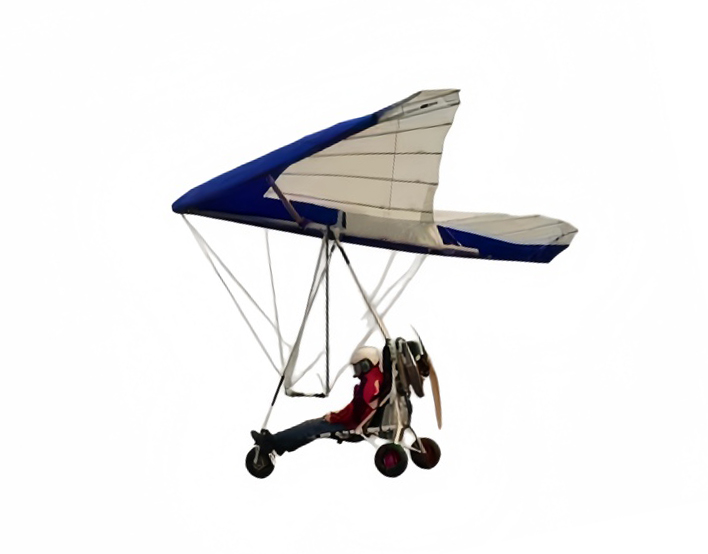
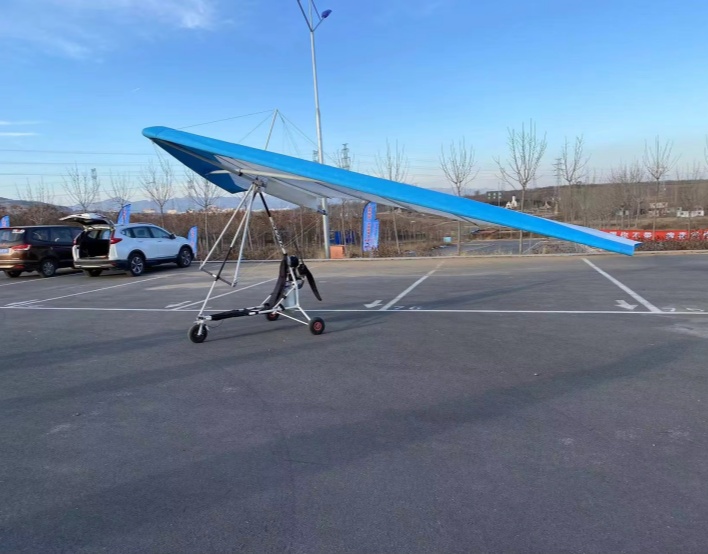
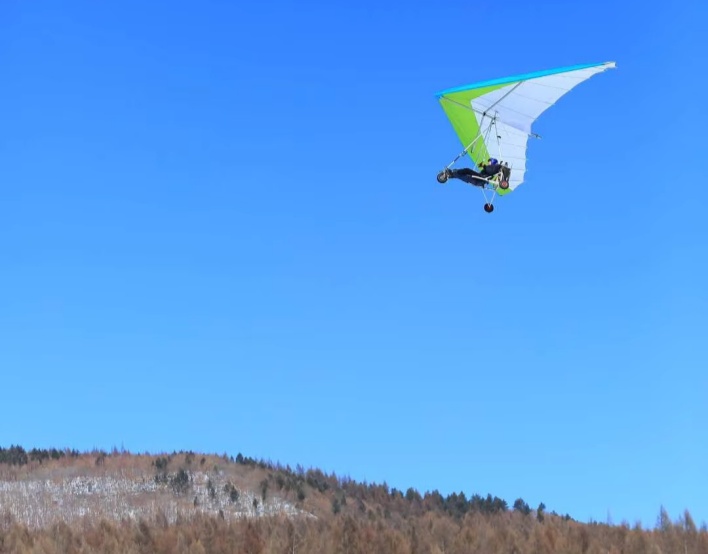
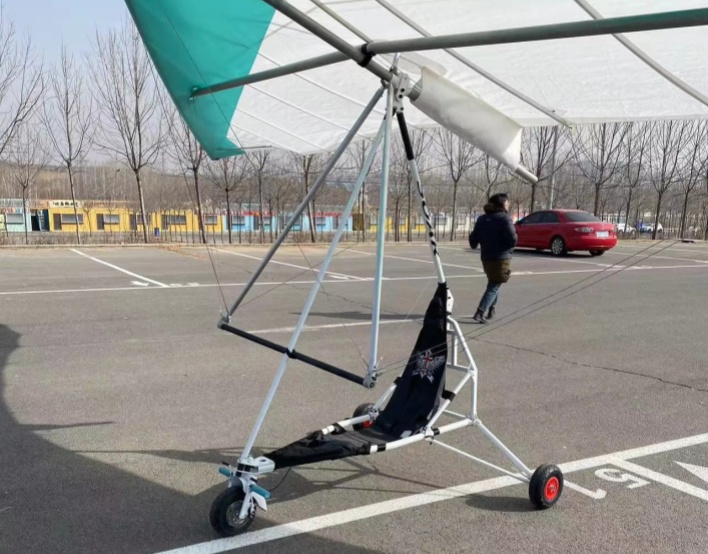
Powered hang glider trike with 2-stroke engine, single seat, 120kg pilot weight and waterproof wing for off-road flying.
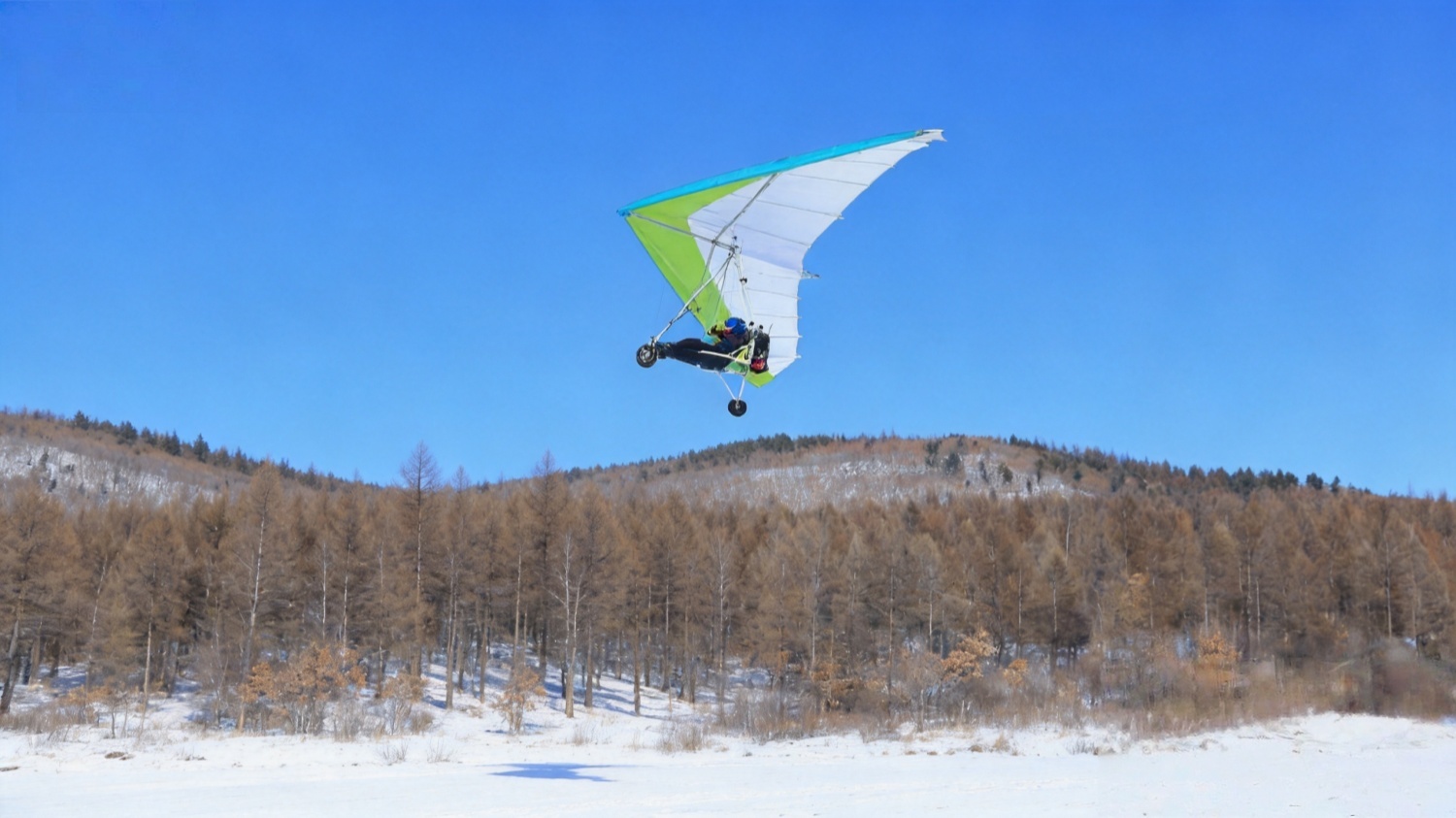
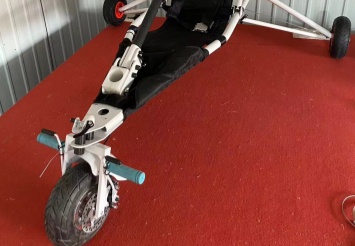
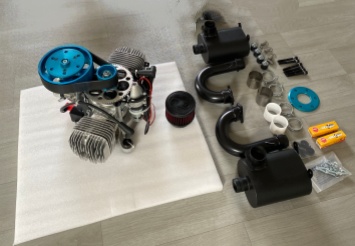
This is a unique motorized paraglider bicycle, with an alloy steel frame and a paraglider wing made of bulletproof cloth. It is powered by a 2-stroke engine with an electric starter, features a single seat, and is suitable for pilots weighing less than 120 kg.
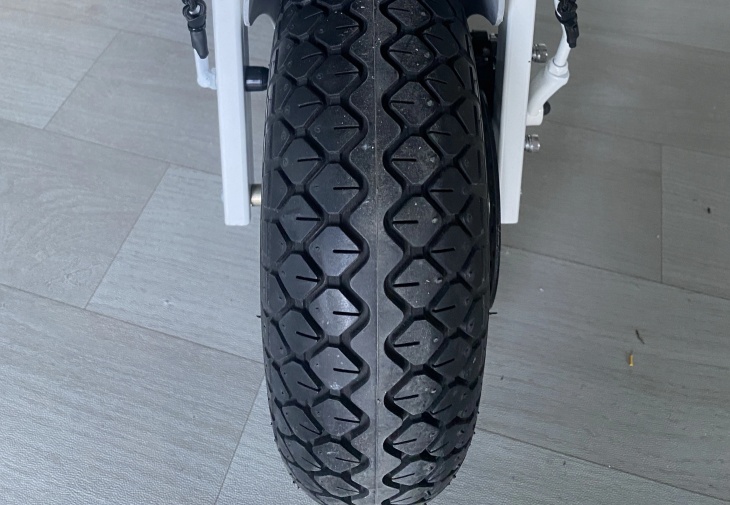
1. Precision tread depth ensures effective water drainage even on wet/grass terrain.
Thick, resilient sidewalls provide a smoother landing, safeguarding every takeoff and landing.
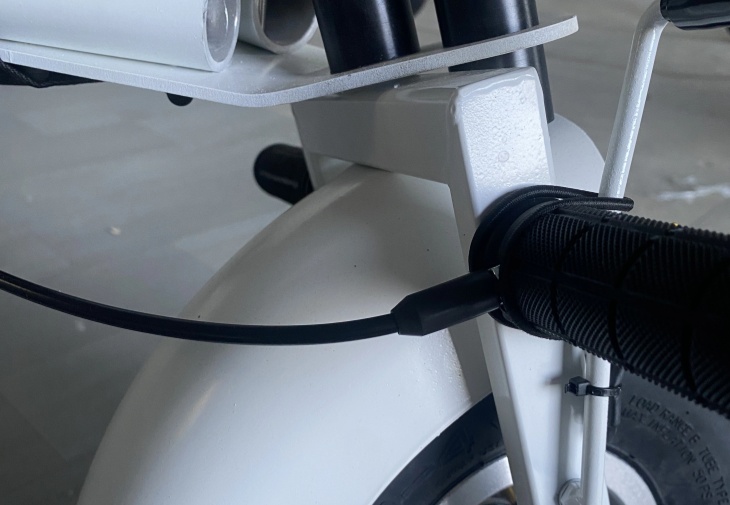
2. Effortless control of direction and power with both feet.
Ergonomic design ensures fatigue-free long flights, maximizing the handling experience.
| Bicycle materials | Alloy steel | Spark Plug | NGKBR8HS-10 |
| Paraglider materials | Bulletproof cloth | Petrol | 92# 95# |
| Engine | 2-stroke | Alternator Output | 14V 5A |
| Engine start-up | Electric starter | Propeller | 1220mm |
| Seat | Single seat | Sail area | 16.2 m2 |
| Pilot weight | <120 kg | Wing span | 9.6 m |
| Type | 2 stroke | Aspect ratio | 5.7 |
| Power | 20HP/8000rpm | Nose angle, ° | 120 |
| Reduction ratio | 1:27 | Weight (without bags) | 26 kg |
| Transmission Type | Belt | Number of sail battens | 14 |
| Starting Type | Electrical Start | Breakdown length | 5.7/3.8m |
| Displacement | 200cm3 | Tested load, G | +6/-3 |
| Diameter x Stroke | 55mm×42mm | Max wind speed | 8 m/s |
| Compression Ratio | 10:1 | Min. airspeed | 33 km/h |
| Lubrication Ratio | 30:1 | Max. airspeed | 70 km/h |
| Weight of Main Engine | 9.5Kg | Min. clip-in weight | 104 kg |
| Weight of Exhaust | 2.6Kg | Max. clip-in weight | 155/ 168 kg |
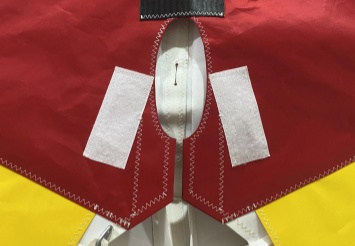
Meteorology is a core factor affecting flight safety, and the following standards must be strictly adhered to:
| Meteorological Elements | Safety Standards |
| Ground Wind Speed | ≤8 m/s (approximately below Force 5) |
| Air Wind Speed | ≤10 m/s |
| Visibility | ≥1 km (powered hang glider) |
| Precipitation | Flying is strictly prohibited in rain or snow |
| Clouds/Fog | No clouds or fog below flight altitude |
Special Notes:
Tailwind Takeoff/Landing is strictly prohibited: Takeoff and landing must be against the wind. Tailwinds significantly increase takeoff distance and the risk of loss of control.
Beware of Turbulence: In conditions of gusts, active thermal air currents, or complex mountain terrain, even if the wind speed does not exceed the standard, careful assessment is required.
Wind Speed Judgment: Ideal flight wind speeds are typically less than 4-5 m/s (approximately 10 mph).
The selection of takeoff and landing sites directly determines flight safety:
Takeoff Site Requirements:
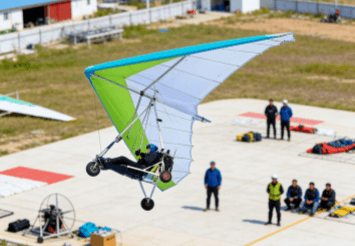
The site should be flat, open, and free of turbulent airflow, with an area of at least 150 meters × 100 meters.
There should be no obstacles affecting takeoff along the takeoff extension line. There should be a backup distance to ensure a safe landing in case of takeoff difficulties.
The relative altitude should be at least 50 meters.
Landing Site Requirements:
The site should be flat, open, and free of obstacles affecting landing.
Good airspace clearance along the landing five-sided path and its extension line.
Avoid flying over densely populated areas or wide bodies of water.
A comprehensive equipment check must be completed before each flight; this is a crucial step in preventing accidents:
1. Aircraft Inspection
Walk around the aircraft to check that all cables and ropes are securely connected and free of tangles.
Check the wings for tears or damage, and the frame for cracks or deformation.
Check that the hangar points and hooks are correctly locked (Hook-in Check).
2. Suspension Confirmation (Critical)
Without a companion: Gently lift the wing upwards with both hands. If you feel an upward pull behind you, the suspension is correct.
3. Safety Equipment
A protective helmet (specialized aviation helmet) must be worn.
Wear sturdy, lightweight flight shoes and a protective flight suit.
Equip yourself with two-way radio communication equipment, an altimeter, and other instruments.
A backup parachute (emergency parachute) is recommended.
Fasten your seatbelt.
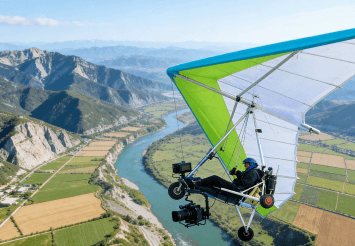
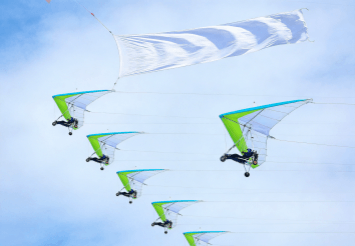
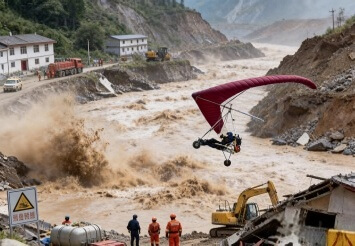
Powered hang glider trikes are widely used in aerial photography and surveying, where they serve as stable platforms for high-precision mapping equipment. They excel in geological exploration, forest fire patrol, agricultural monitoring, and emergency rescue operations. With low takeoff and landing requirements, they can operate in remote areas where traditional aircraft cannot. These versatile aircraft are also popular for tourism, flight training, and aerial advertising, making them an ideal choice for both commercial operations and recreational flying.